
Kibyra Ancient City: A Silent Witness to the Taurus Mountains
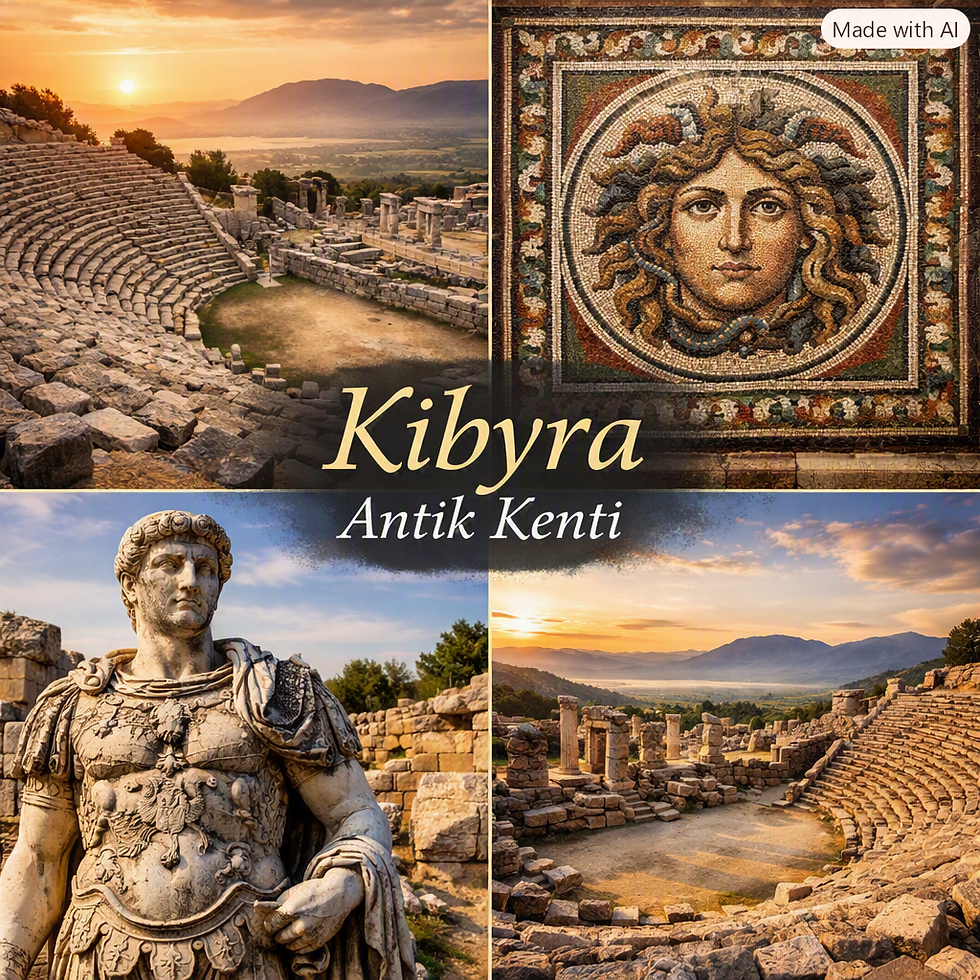
Nestled at the foot of the Taurus Mountains in Gölhisar district of Burdur, the ancient city of Kibyra is one of the most remarkable archaeological sites in Anatolia, thanks to both its magnificent structures and its location nestled in nature. Built on three hills, this city has been an important center both culturally and economically throughout history, and today it offers its visitors a journey through both history and nature.
🏛 Historical Background
Kibyra's origins date back to the 2nd century BC. The city, which flourished during the Pergamon Kingdom, quickly fell under Roman rule and became a magnificent city. Along with Boubon, Balboura, and Oinoanda, it formed a four-city alliance called the "Tetrapolis," through which it gained regional power.
Although a major earthquake in 23 AD destroyed the city, Kibyra was rebuilt with the support of Roman Emperor Tiberius. This rebirth ensured that the city became even more magnificent during the Roman period.
🗿 Architecture and Art
Stadium: With a capacity of 12-13 thousand people, it is one of the largest in Anatolia. Its stone steps offer unique photo opportunities for photographers in the morning light.
Odeon (Assembly Building): This structure, with a capacity of 3,600 people, is famous for its Medusa mosaic made of red, green, and white marble. This mosaic, the only one of its kind in Anatolia, showcases the artistic richness of the city.
Agora and Fountain: Rebuilt after the earthquake, these structures form the center of the city's social life.
Baths and Gymnasium: They bear traces of the social and cultural life of the Roman period.
🔎 Recent Discoveries
Excavations at Kibyra have been ongoing since 2006, and new findings are uncovered every year.
The statue of Roman Emperor Hadrian: This 2.14-meter-tall statue, notable for its lion and eagle reliefs on its armor, was restored and brought back to its original position in 2026.
Statue of Empress Sabina: Fragments found, restoration work ongoing.
Mosaic Area: Covering 540 m², it is one of the best-preserved and largest mosaics in Anatolia.
🌿 Surrounded by Nature
Kibyra is captivating not only for its stone structures but also for the surrounding Taurus Mountains scenery. Walking on the stone steps of the stadium in the cool morning air, or gazing at the colors of the Medusa mosaic in the late afternoon, offers visitors an experience that integrates both history and nature.
📸 Photography and Travel Experience
For photography enthusiasts, Kibyra is a unique setting where light and stone meet. Morning views and afternoon shadows, in particular, are ideal for capturing images that reflect the spirit of the city.